How Google AI Overviews Are Changing Website Traffic in 2026
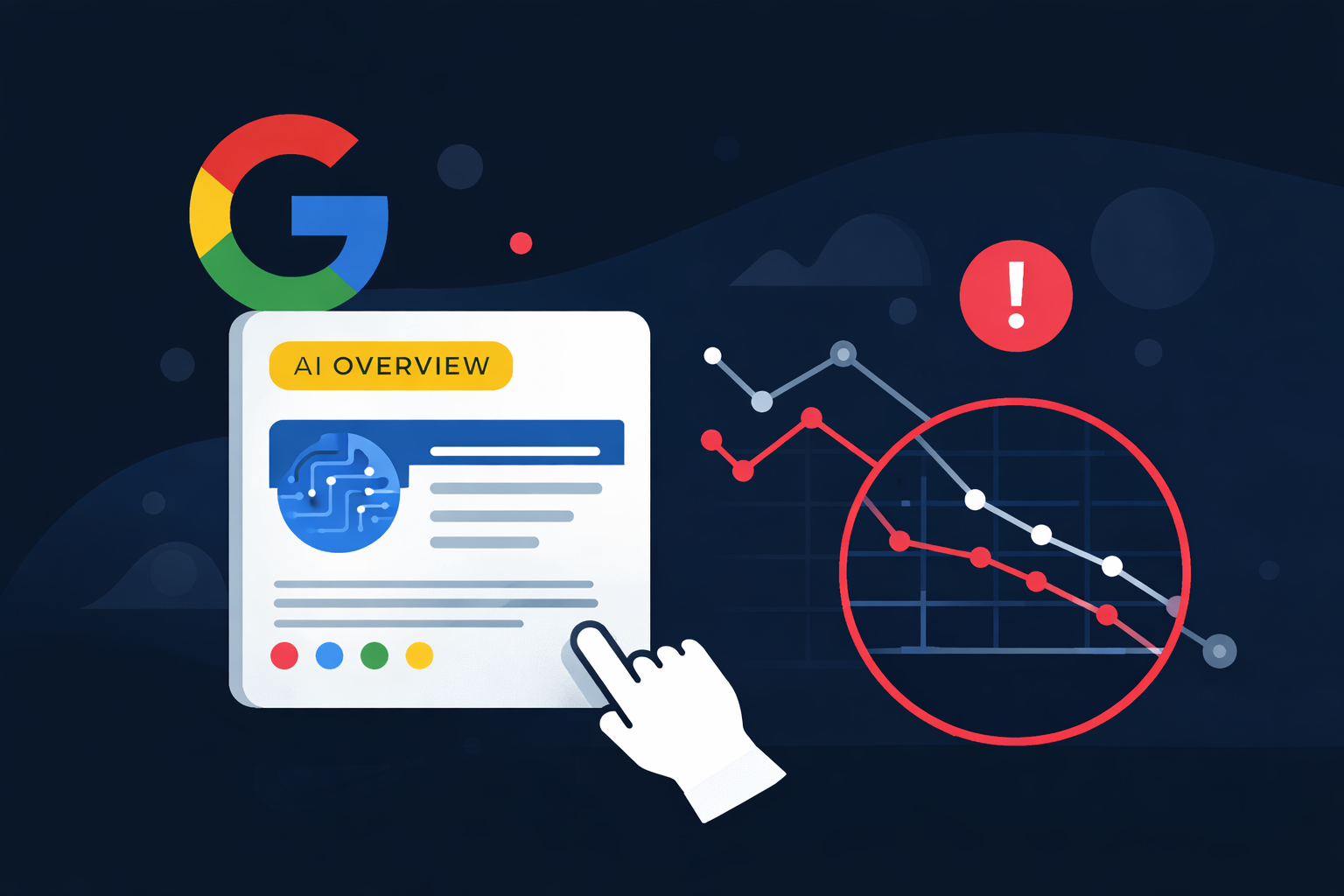
Over the past year, many businesses have started noticing a shift in how people interact with search results.
When someone searches for a question or a local service, the results page often now includes an AI-generated overview at the top. These summaries combine information from multiple websites and present a quick answer directly within the search page.
For users, this can make finding information faster. For businesses, however, it can change how often people actually click through to websites.
As a result, many companies are beginning to rethink how they measure and evaluate online traffic.
What Google AI Overviews Actually Do
AI Overviews appear above traditional search results and attempt to summarise the answer to a user's query.
Instead of clicking through several websites to compare information, users can often read a short explanation generated from multiple sources.
A typical AI overview might:
-
summarise key points from several websites
-
provide a short answer to a question
-
highlight recommended services or steps
-
include links to supporting sources
While links to websites still appear within the results, the presence of a detailed summary can sometimes reduce the need for users to visit each individual page.
This is one reason why some businesses have started seeing changes in their website traffic patterns.
Why Click Behaviour Is Changing
For many years, search engines worked in a relatively predictable way. A person typed a query, reviewed the results, and clicked one or more websites to find the information they needed.
With AI summaries now appearing directly in the results page, that process is evolving.
In some cases, users may find the information they need without clicking further.
In others, they may only visit one site rather than several.
This does not mean websites are becoming less important. Instead, it means the path between search and website visit is becoming shorter and more selective.
Businesses are therefore paying closer attention to the difference between search visibility and actual website visits.
The Difference Between Visibility and Visits
Being visible in search results has always been valuable, but visibility alone does not necessarily guarantee that someone will reach a website.
A page may appear in search results, yet the user may choose to read the AI overview instead.
From a business perspective, the moment that matters most is when someone actually arrives on the website and begins exploring the information there.
That visit is when a potential customer can:
-
read service descriptions
-
view examples of work
-
compare options
-
submit an enquiry or make contact
For this reason, many businesses are beginning to focus more directly on confirmed website visits rather than earlier signals such as impressions or clicks alone.
How Businesses Are Responding
As search behaviour changes, companies are adjusting how they think about digital marketing performance.
Instead of focusing only on how often an advert or listing appears, they are increasingly asking:
How many real visitors reached our website?
This shift in thinking is leading some businesses to explore marketing approaches that measure traffic in a more direct way.
In certain models, the cost of marketing activity is connected more closely to the moment when a visitor actually arrives on a website rather than earlier stages such as ad impressions.
While these approaches are still evolving, they reflect a broader interest in connecting marketing spend more closely to real visitor activity.
A Changing Search Landscape
The introduction of AI-generated summaries represents one of the most significant changes to search behaviour in many years.
Search engines are becoming more conversational, more summarised, and more focused on answering questions quickly.
For users, this can make finding information faster.
For businesses, it means that website traffic patterns may continue to evolve as search technology develops.
Understanding how people move from search results to websites is therefore becoming an increasingly important part of online marketing strategy.
As AI search tools continue to expand, businesses that pay attention to how real visitors reach their websites will be better positioned to adapt to these changes.